What’s Really Making Avondale Pavers Look Dirty?
Pavers can look dirty even when the problem is not simply dirt. A driveway may appear darker in the tire paths, a patio can develop chalky patches, and pool-deck pavers may look dull even after being rinsed. What you see on the surface often comes from several different sources.
That distinction matters because effective paver cleaning starts with identifying what is actually affecting the surface. Ground-in dust, oil, organic residue, efflorescence, worn coatings, and material-specific discoloration do not necessarily respond to the same treatment.
Here is how to tell what may really be making your Avondale pavers look dirty.
Sometimes the "Dirt" Is Embedded Surface Buildup
Loose dust is easy to notice because it moves when you sweep or rinse the area. The harder problem develops when fine debris settles into the texture and pores of the pavers.
Driveways, walkways, patios, and other outdoor surfaces continually collect soil, vehicle residue, landscaping debris, and airborne particles. Repeated foot or vehicle traffic can work that material deeper into textured surfaces.
That is why a quick rinse may make the pavers look better while they are wet, only for the dull appearance to return after they dry.
Professional cleaning approaches this as surface buildup rather than assuming more water pressure is automatically the answer. The surface material, condition, stains, drainage, and surrounding areas should all be considered before cleaning begins. This is also how we approach pressure washing and paver cleaning projects.
Dark Driveway Marks May Be More Than Ordinary Grime
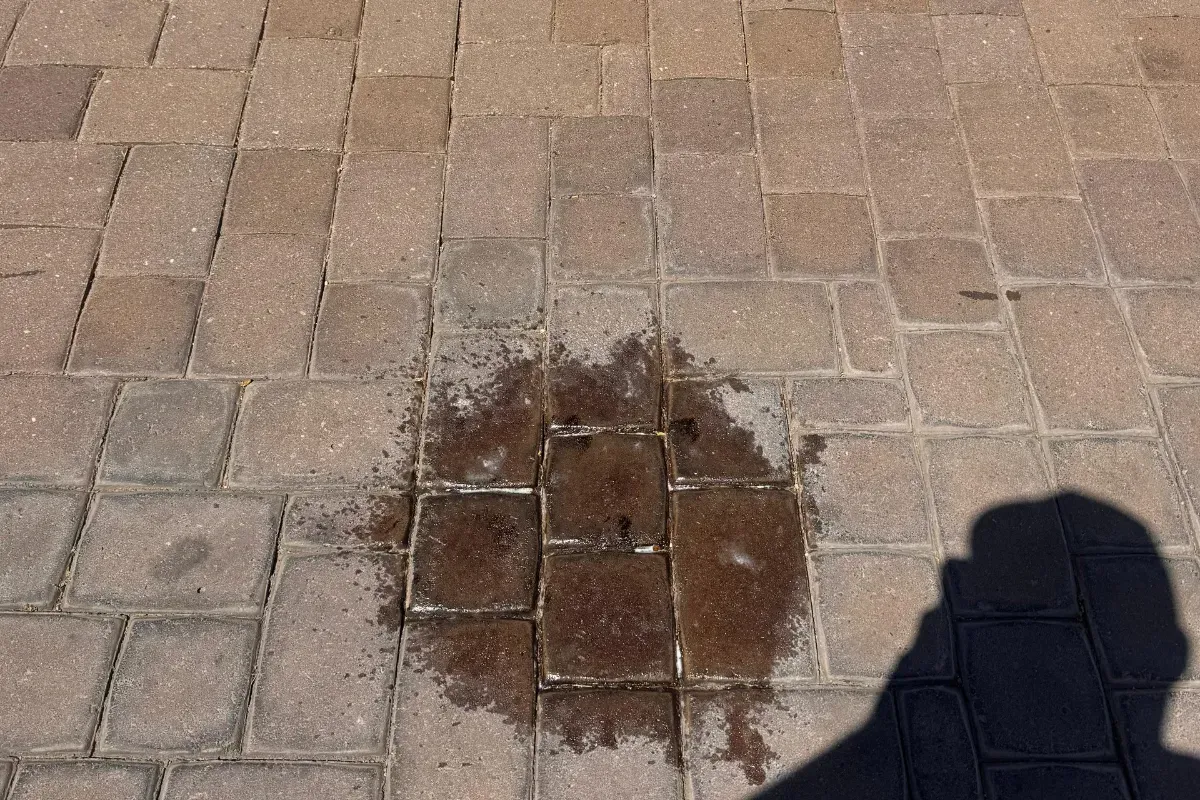
Driveway pavers tend to develop their own pattern of discoloration. Areas where tires repeatedly travel or vehicles sit may look darker than surrounding pavers.
Possible causes include:
oil or automotive-fluid staining
tire-related marks
dirt deposited by vehicles
fine debris packed into textured pavers
a combination of old staining and newer surface grime
Oil deserves particular attention because porous hardscape materials can absorb it. The longer it remains, the more difficult the visible stain may become to address. Industry guidance also notes that different stains require different cleaning products and methods rather than one universal treatment.
Cleaning can often reduce visible staining and improve the overall appearance, but deeply set stains may not disappear completely. We prefer setting realistic expectations rather than treating every dark spot as something that can automatically be erased.
White or Chalky Areas May Not Be Dirt at All
One of the easiest paver problems to misidentify is a pale white haze.
On concrete pavers, that appearance may sometimes be efflorescence. Efflorescence develops when soluble materials are carried toward the surface by moisture and leave a whitish deposit behind. The Concrete Masonry & Hardscapes Association describes it as primarily an appearance issue rather than a sign that concrete pavers have lost their structural performance.
This is useful to know because repeatedly pressure washing a white area without identifying it first may not address the actual problem.
Not every white mark is efflorescence, either. Light-colored residue can have other causes, especially around pools or previously treated surfaces. Proper identification should come before choosing a cleaner.
Pool-Deck Pavers Collect a Different Mix of Residue
A paver driveway and a paver pool deck may be made from similar-looking materials, but they are exposed to different conditions.
Around a pool, the surface may encounter:
repeated water exposure
mineral or hard-water residue
poolside splashes
landscaping debris
sunscreen and other foot-traffic residue
organic buildup in shaded or damp areas
ordinary desert dust
These layers can create an uneven or hazy appearance rather than one obvious stain.
Material matters here too. Concrete pavers, brick, and travertine should not automatically receive identical cleaning treatment. Travertine is natural stone and its porosity and surface condition need to be considered before selecting cleaning products or methods.
The goal is not maximum cleaning aggression. It is removing the appropriate buildup without unnecessarily affecting the surface.
Why Pavers Can Look Faded Even When the Color Is Still There
Sometimes homeowners describe pavers as "faded" when a layer on top of the surface is muting the color underneath.
Fine dirt, chalky deposits, weathered residue, and other buildup can make contrasting paver colors look flatter and less defined. Cleaning away that material may reveal more of the existing color.
Efflorescence is a particularly good example. CMHA notes that its white haze can create the impression that concrete-paver color is fading even though the deposit itself is on the surface.
There is still an important distinction between cleaning and restoring permanently altered material. Cleaning removes appropriate surface contamination. It cannot reverse every form of weathering, wear, previous coating issue, or permanent stain.
The Joints Can Make the Whole Installation Look Messier
People naturally focus on the faces of the pavers, but the joints have a major influence on how the entire area looks.
Loose debris can collect between pavers. Existing joint sand may become uneven or depleted in certain locations. Small weeds or organic material can also draw attention to the joints and make an otherwise acceptable surface appear neglected.
This does not mean every dirty paver area needs new polymeric sand.
During cleaning-only projects, our goal is to protect existing joint sand as much as practical. When sand has already been lost or stripped, replacement may be considered separately. Joint work should be based on the actual condition of the paver system rather than automatically added to every cleaning project.
An Old Surface Coating Can Also Change How Pavers Look
If pavers were sealed in the past, the visible problem may occasionally involve the old coating rather than ordinary dirt.
A previous sealer can wear unevenly. Some sections may look different from others because of traffic, weather exposure, application history, or the condition of the coating itself.
That is one reason cleaning and resealing should not be treated as interchangeable services. Cleaning addresses contaminants on the surface. A deteriorated or incompatible coating may require a different evaluation before anything new is applied.
Similarly, sealing should not automatically follow every cleaning job. If the goal is simply to remove buildup and refresh the surface, cleaning may be appropriate as a standalone service.
More Pressure Is Not Automatically Better Cleaning
A common assumption is that stubborn paver discoloration requires a stronger pressure washer.
That approach overlooks the material being cleaned.
Professional industry guidance recognizes pressure washing as one method used for concrete pavers, while also emphasizing appropriate equipment and techniques to improve cleaning effectiveness while limiting potential damage.
Overly aggressive cleaning can create its own problems, including unnecessary surface wear or joint-sand loss.
The better question is not, "How much pressure will remove this?"
It is, "What is this material, what is causing the discoloration, and what cleaning approach fits both?"
A Simple Way to Read What Your Pavers Are Telling You
Before deciding what your pavers need, look at the pattern.
Uniform dullness across a large area:
This often points toward widespread surface grime, dust, or general weathering rather than one isolated stain.
Dark spots beneath parked vehicles:
Oil or another automotive residue may be involved.
White chalky patches:
Efflorescence may be one possibility on concrete pavers, but the deposit should be identified before treatment.
Dirty-looking joints with relatively clean paver faces:
Joint debris, vegetation, or sand condition may be contributing more to the appearance than the pavers themselves.
Uneven shiny and dull areas:
A previous coating may deserve inspection.
Discoloration near a pool:
Water exposure, mineral residue, organic material, and the specific paver or stone type should all be considered.
The pattern does not provide a laboratory diagnosis, but it helps narrow down what needs attention instead of treating every issue as ordinary dirt.
Paver Cleaning Resources Worth Knowing About
Different paver materials and stains call for different products, so homeowners researching cleaning options may find these manufacturer and industry resources useful.
Concrete Masonry & Hardscapes Association
The Concrete Masonry & Hardscapes Association cleaning and sealing guide explains common maintenance considerations for interlocking concrete pavement, including staining, cleaning, and efflorescence. It is especially useful for understanding why identifying the surface condition comes before selecting a treatment.
Techniseal Paver Restorer
Techniseal Paver Restorer is an example of a specialty product designed for specific hardscape deposits rather than ordinary household cleaning. Its intended surfaces and uses illustrate why paver products should always be selected according to the material and problem being treated.
PROSOCO Hardscape Care Resources
PROSOCO hardscape and paver products include different formulations for different types of contamination, including general buildup and oil-related staining. This is a useful reminder that there is no single cleaner suited to every stain or substrate.
Always follow manufacturer instructions, verify that a product is appropriate for your exact paver material, and test where recommended. Avoid mixing cleaning chemicals or assuming a cleaner intended for concrete is automatically appropriate for natural stone.
When Professional Paver Cleaning Makes Sense
Routine sweeping, removing loose debris, and addressing fresh spills promptly can handle part of normal paver maintenance.
Professional paver cleaning becomes more useful when dirt has become embedded, a large surface needs consistent cleaning, multiple types of discoloration are present, or you are unsure whether you are looking at grime, a stain, efflorescence, or another surface condition.
At Super Paver Clean and Seal, we clean paver driveways, patios, walkways, and pool decks and evaluate the surface and staining before deciding how the area should be treated. Our paver cleaning service is available throughout Maricopa County, including Avondale.
The goal is not to promise that every mark will disappear. It is to identify what is affecting the pavers, clean the surface appropriately, and give you a realistic idea of what improvement is possible.
Frequently Asked Questions About Dirty Pavers
Why do my pavers still look dirty after I hose them off?
A garden-hose rinse can remove loose debris but may leave behind embedded grime, oil, mineral deposits, organic residue, and other contaminants. If the surface looks noticeably better while wet and dull again after drying, deeper buildup may be part of the problem.
Can dirt make pavers look faded?
Yes. Surface buildup can mute the visible color and texture of pavers. White efflorescence can also create a faded-looking haze on concrete pavers even though the paver itself has not necessarily lost that color.
Can every oil stain be removed from pavers?
No cleaning method should be expected to remove every oil stain completely. Results depend on the paver material, porosity, type of contaminant, age of the stain, and previous treatment. Older or deeply absorbed staining may remain partially visible.
Are white stains on pavers always efflorescence?
No. Efflorescence is one possible cause of a white or chalky deposit, particularly on concrete and masonry products, but other residues can look similar. Identifying the source before treatment is the safer approach.
Should I pressure wash dirty pavers myself?
Light homeowner maintenance does not always require professional equipment, but pressure should be used cautiously. Excessively aggressive cleaning can affect the paver surface or remove joint material. Material type and condition should guide the method instead of assuming stronger pressure will produce better results.
Does cleaning mean my pavers also need to be sealed?
Not necessarily. Cleaning can be performed as a standalone service. Sealing is a separate decision influenced by paver material, existing coatings, surface condition, desired appearance, exposure, and maintenance goals.
Why are the pavers beneath my vehicles darker?
Vehicle areas can collect oil, tire-related residue, dirt, and other automotive contaminants. Because pavers may be porous, some stains can penetrate below the immediate surface and require more targeted treatment than ordinary rinsing.
Can cleaning fix sinking or uneven pavers?
No. Cleaning addresses surface contamination and appearance. Sinking pavers, significant settlement, failed base material, drainage problems, or structural movement may require repair or reinstallation rather than cleaning alone.
Find Out What Is Really Affecting Your Avondale Pavers
Dirty-looking pavers do not always have one simple cause. The issue may be ordinary ground-in debris, oil, poolside residue, efflorescence, joint buildup, or the condition of an older coating. Identifying the cause first makes it much easier to choose the right next step.
If your driveway, patio, walkway, or pool-deck pavers have become dull, stained, or difficult to clean with routine maintenance, Super Paver Clean and Seal can help evaluate the surface and discuss the appropriate cleaning approach.
Call (602) 346-9897 or contact us to discuss your pavers and current service options.